This post was freelanced for Tennessee State Parks, originally published on their blog as “Unplugging to Reconnect at Chickasaw State Park.” I was financially compensated for this post.

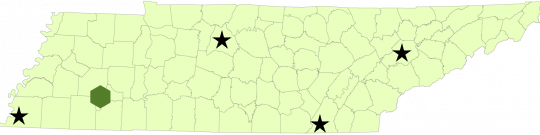
As K-12 educators, my husband and I approach Spring Break with perhaps more anticipation than the students. It’s a welcome respite from our daily routines and responsibilities, yes, but it also signifies a refreshing mental transition. Goodbye, dark winter months; the finish line is near, and with it comes a renewed energy that mirrors the changing seasons. This year, we decided to spend a few days of our break at Chickasaw State Park, located about 20 miles south of Jackson.
The name “Chickasaw” is a familiar one in our state’s history; this western Tennessee land on which the park now sits is the ancestral home of the Chickasaw people, a small but powerful and exceptionally organized tribe whose territory spanned northern Mississippi and Alabama into western Tennessee and Kentucky. The Chickasaw utilized the river for trade and the land for hunting before being forcibly removed to Indian Territory (present-day Oklahoma) in the 1830s.
By the early 20th century, the land was overused and unsustainable for farming, and it was reclaimed by the federal government, becoming one of the state’s 20 New Deal-era park projects. When Chickasaw first opened as a recreation area in the late 1930s, it quickly drew a considerable, enthusiastic audience. As TVA projects soared following the New Deal, so did opportunities for tourism along these newly developed waterways. These destinations included cabins and campgrounds, group lodges, restaurants, and facilities for all kinds of outdoor activities, ranging from picnicking to athletic fields to boat docks. For the first decade of its existence, Chickasaw was by far the most visited park of Tennessee’s state park system, and on a present-day visit, you can still experience what drew visitors to this outdoor haven.
“Compared to some other parks, where areas are miles apart, Chickasaw is walkable.” Park Manager Ron Elder has been at the park for over 20 years; he knows his stuff. And when I asked him what makes Chickasaw unique, it was this geography that he kept coming back to. The state park sits on 1,200 acres of some of the highest terrain in West Tennessee, but the core of its facilities are condensed into a tight community that can be traversed by foot in under half an hour. Designed with a layout and atmosphere that demands an unignorable connection to the present experience, Chickasaw gave my family a glimpse at the simplicity of a disconnected, analog vacation from the past.
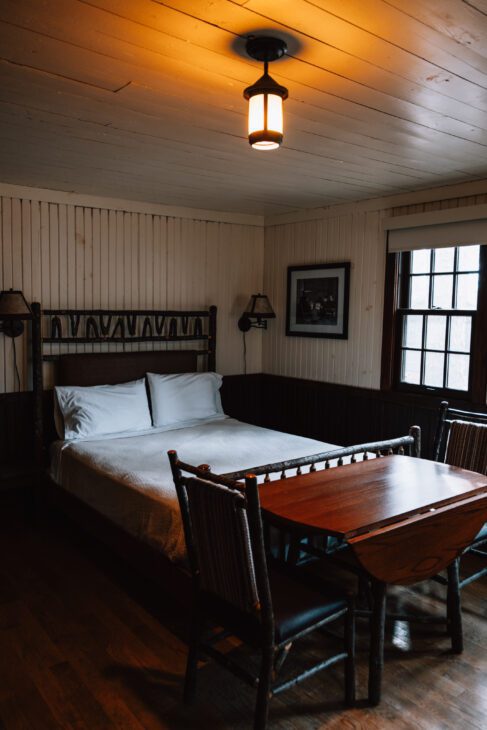
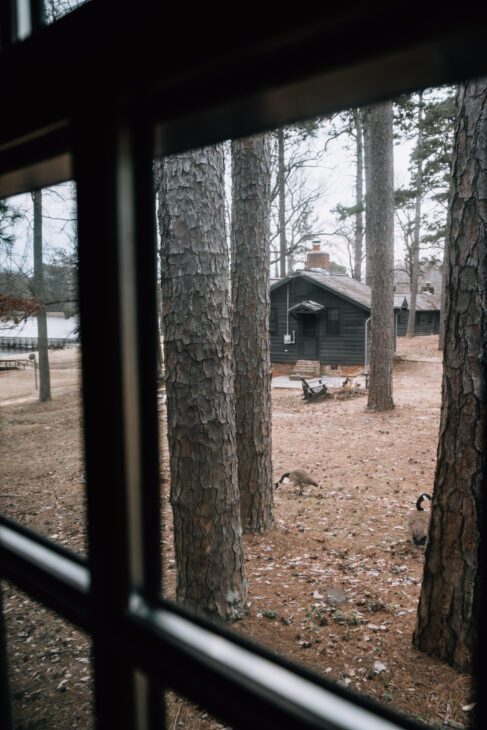
THE CABINS
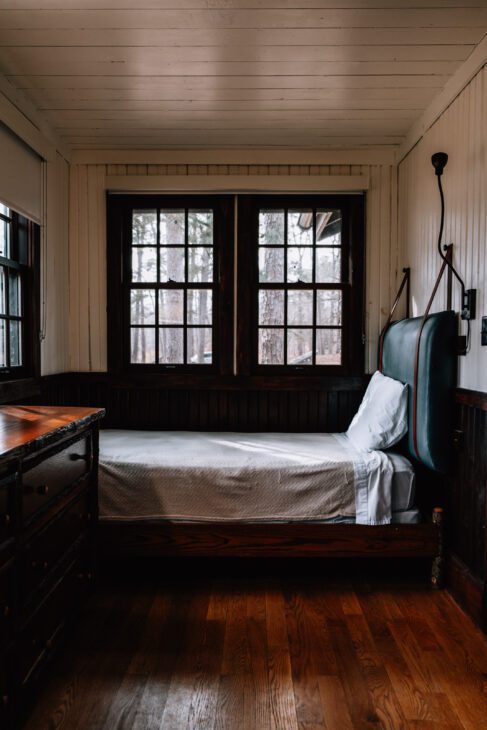
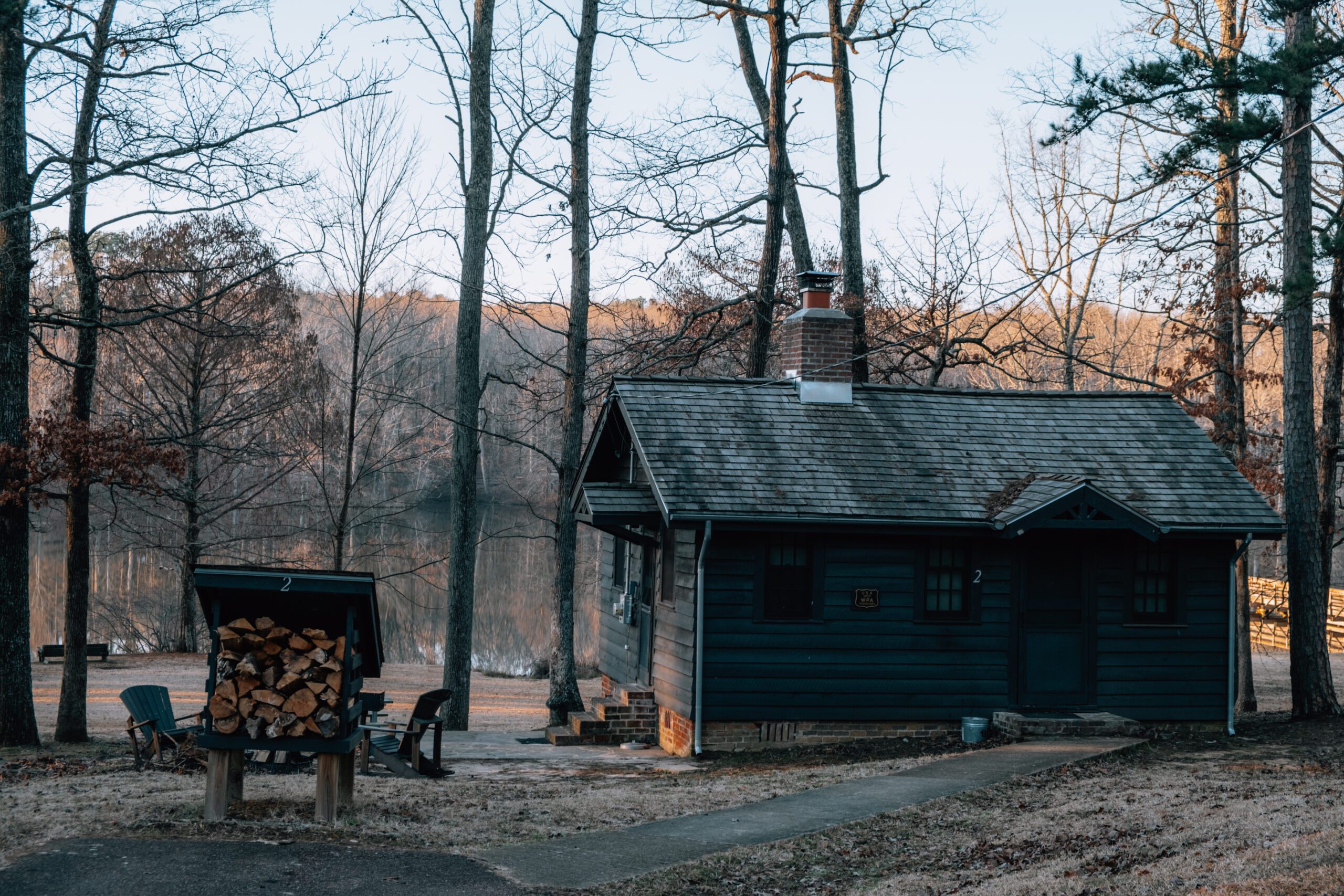
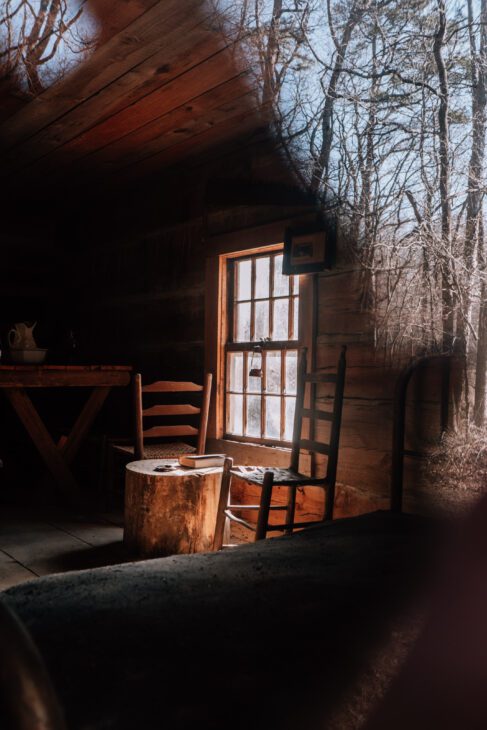
March in Tennessee is a gamble, weather-wise, but the forecast looked promising for our 3-night cabin stay. We arrived early on a Saturday afternoon and checked into cabin number 3, one of the park’s seven historic cabins built by the Works Progress Administration. These one-bedroom cabins (#1-7) sleep up to 4 and are closest to the shores of Lake Placid. Each has undergone a full restoration, including new furniture and appliances, and, as a truly heroic amenity for families, every single window includes a black-out shade.
There are six additional cabins that were added following Chickasaw’s early immense popularity; cabins #8-12 are perched just up the hill from the historic cabins, featuring two bedrooms, sleeping up to 6 people, and still enjoy views of the lake. (Cabin #13, the park’s most ADA accessible, is located away from the main cabin area, across from the Visitor Center.)
The layout of the park seems to have been designed with community in mind. The cabins, as well as the group lodge, are steps away from the central lakefront recreation area where the activities are abundant. Best of all for us, those options included a playground where our kids could enjoy some free-range play within a short walk from the cabin. For the first time in our 21st-century lives, I was able to prepare a meal in peace and holler out the cabin door when it was ready. Within a minute, the kids came running.
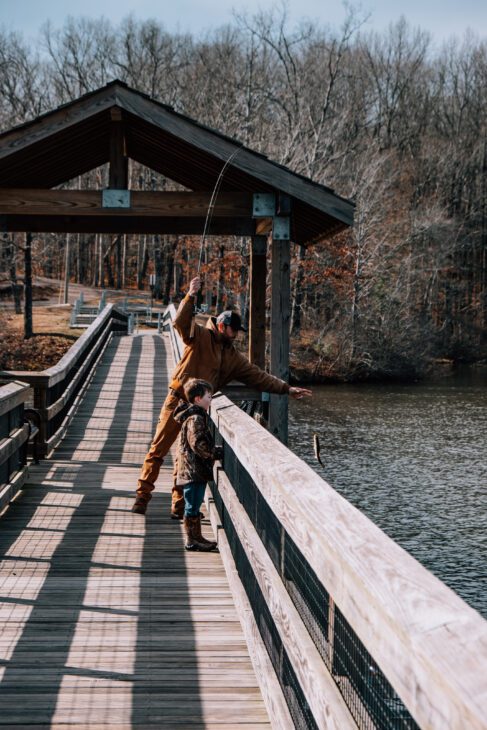
LAKEFRONT ACTIVITIES
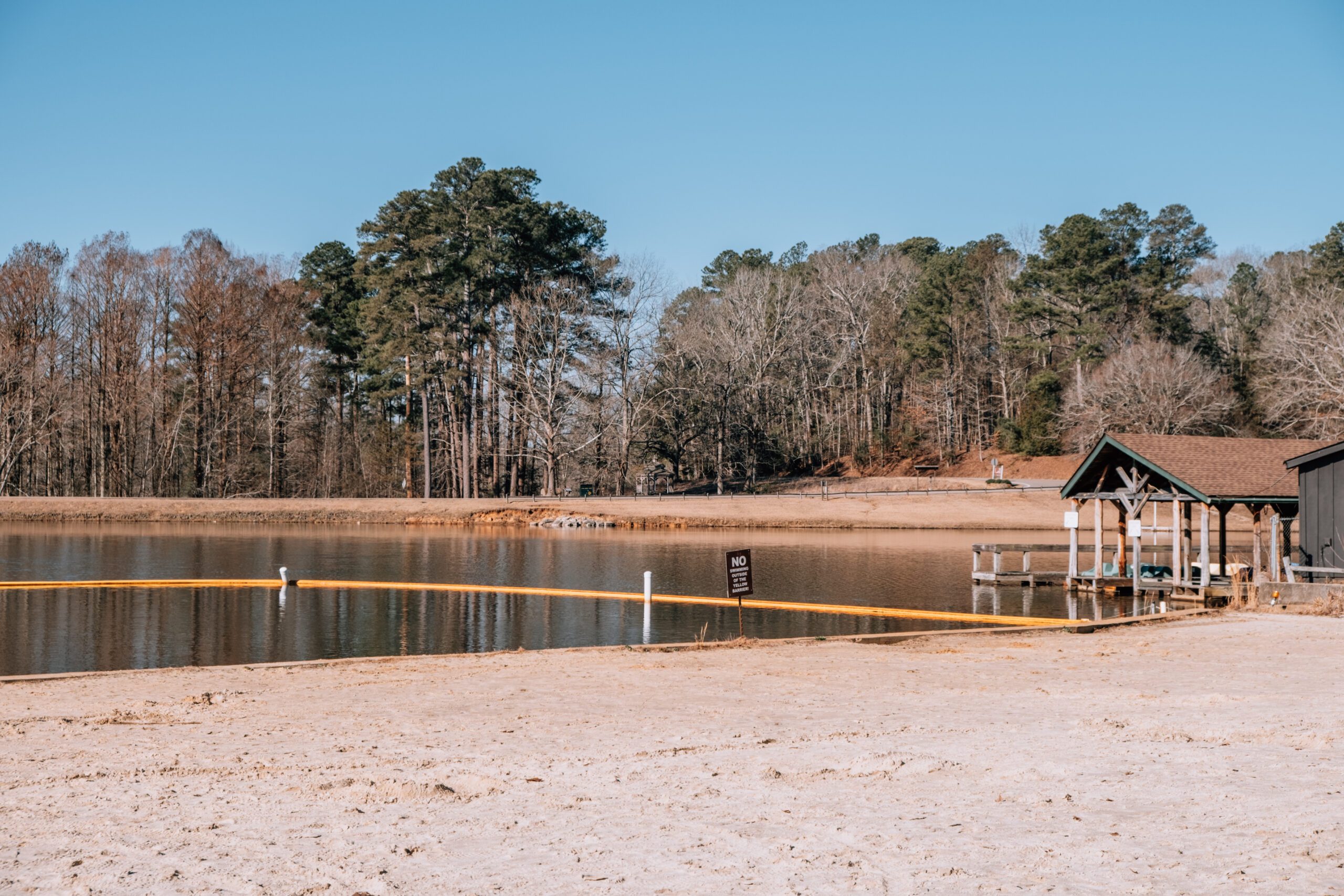
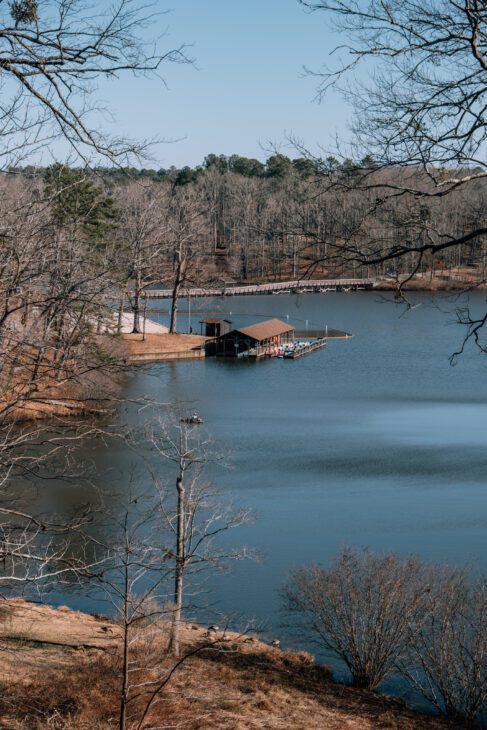
On a summer day, the swimming beach would be a welcome spot to cool off. In early March, it provided a peaceful place to stretch out and read in the warm sun, keeping my distance from Lake Placid’s still-icy water. Next to the beach, the boat dock (open Memorial Day through mid-October) offers pedal boats, kayaks, canoes, and stand up paddleboards for hire, or you can bring your own for launch year-round. One of the most popular programs offered at Chickasaw is after-hours (both sunrise and sunset) canoe and kayak floats. Basketball and volleyball courts are a stone’s throw away and adjacent to the playground, forming this mecca of activity for park visitors.
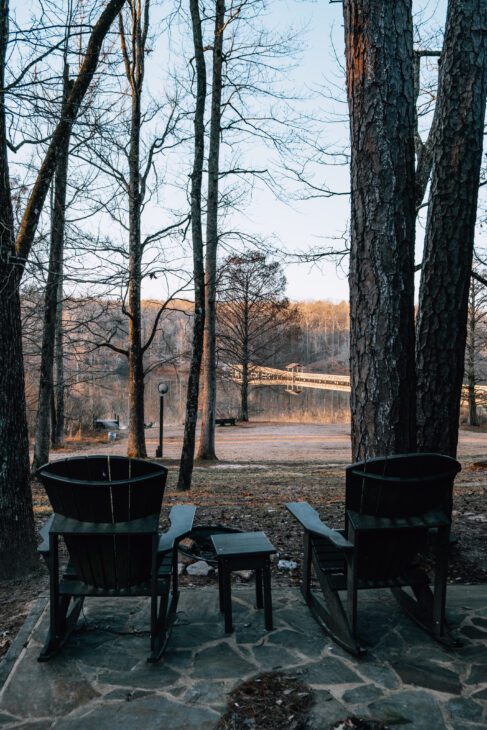
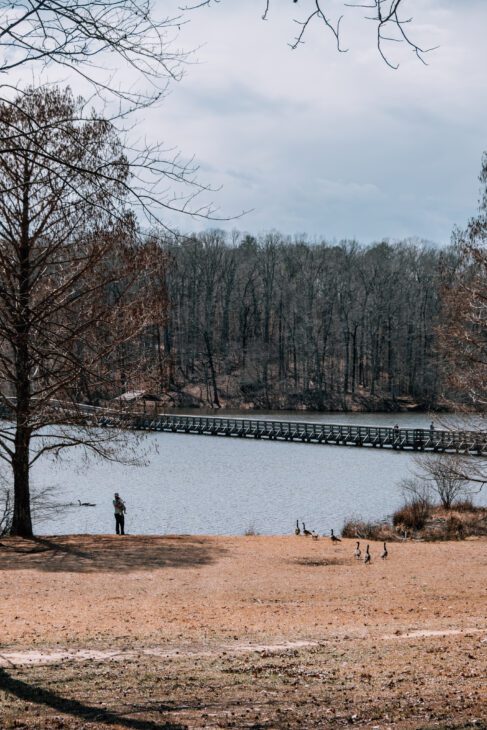
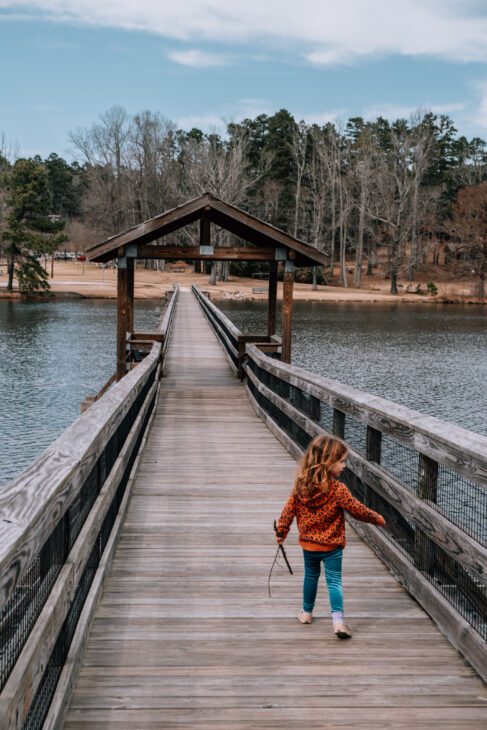
Arguably the most quintessential piece of scenery at Chickasaw State Park is the magnificent wooden pedestrian bridge spanning the width of Lake Placid. It was the brainchild of former Park Manager Joe Armour and first constructed in 1971, connecting the recreation area to the camping area. The current iteration was built more recently in 2018 and provides a wonderful – and ADA-accessible – spot to fish.
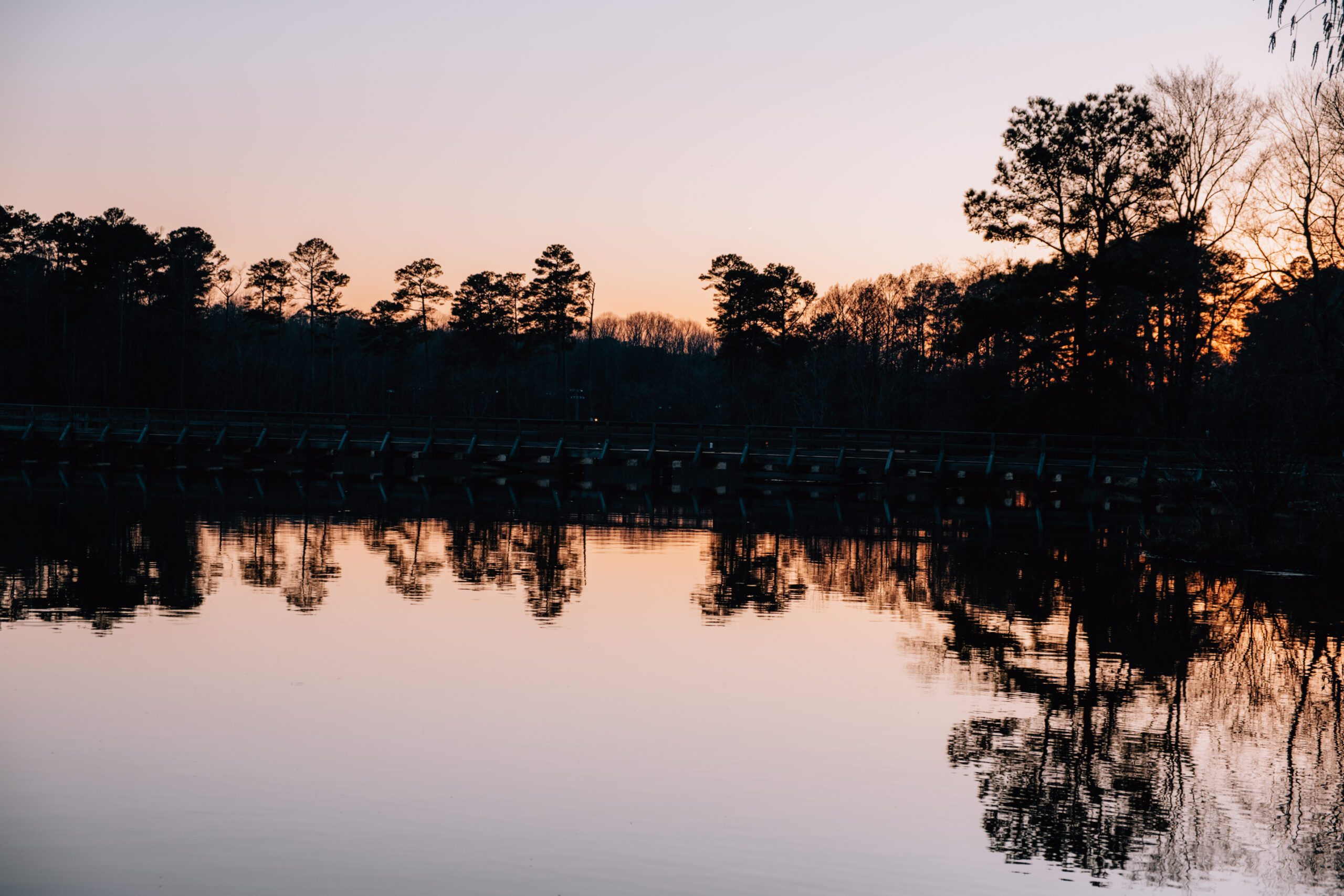
But the beauty of this hub of activity is that you don’t have to be doing anything to enjoy it; you can just be. Taking a seat to soak in the surroundings is enough. From the gentle sway of a bench swing, I finished reading an entire book as well as two full issues of Travel + Leisure, and from the small pier behind our cabin, my family sat quietly and witnessed stunning sunrises and sunsets.
HORSEBACK RIDING
When I told my kids we’d be horseback riding on this trip, I was met with immediate excitement… followed by some fearful hesitation. For these suburban girls, the only horses they’d really seen were through a car window or on a television screen.
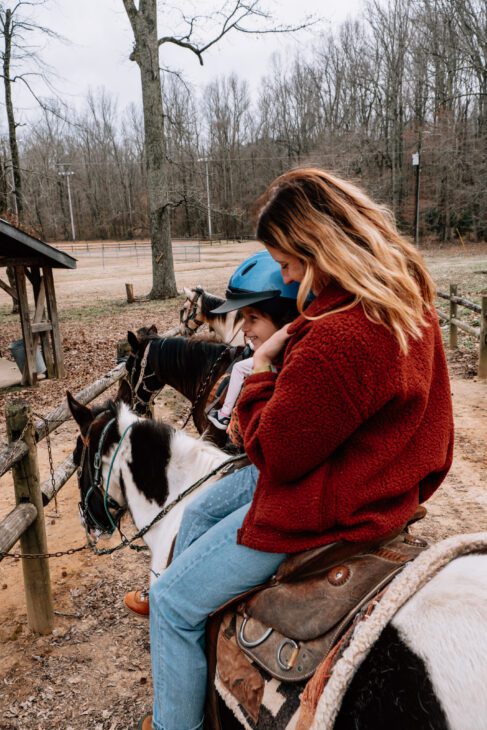
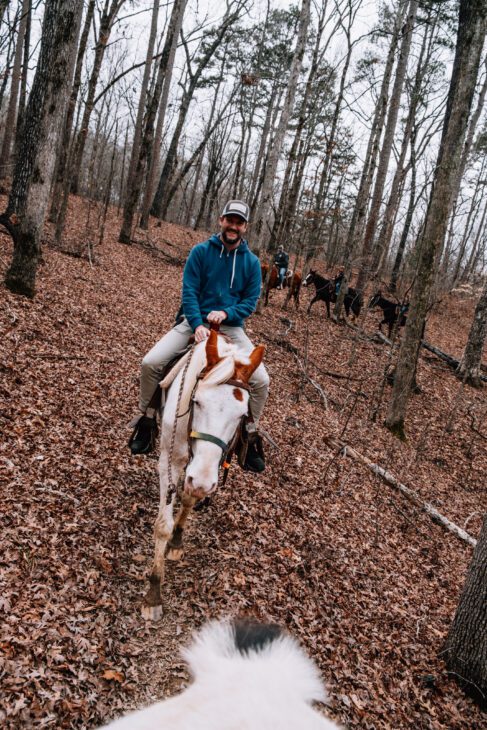
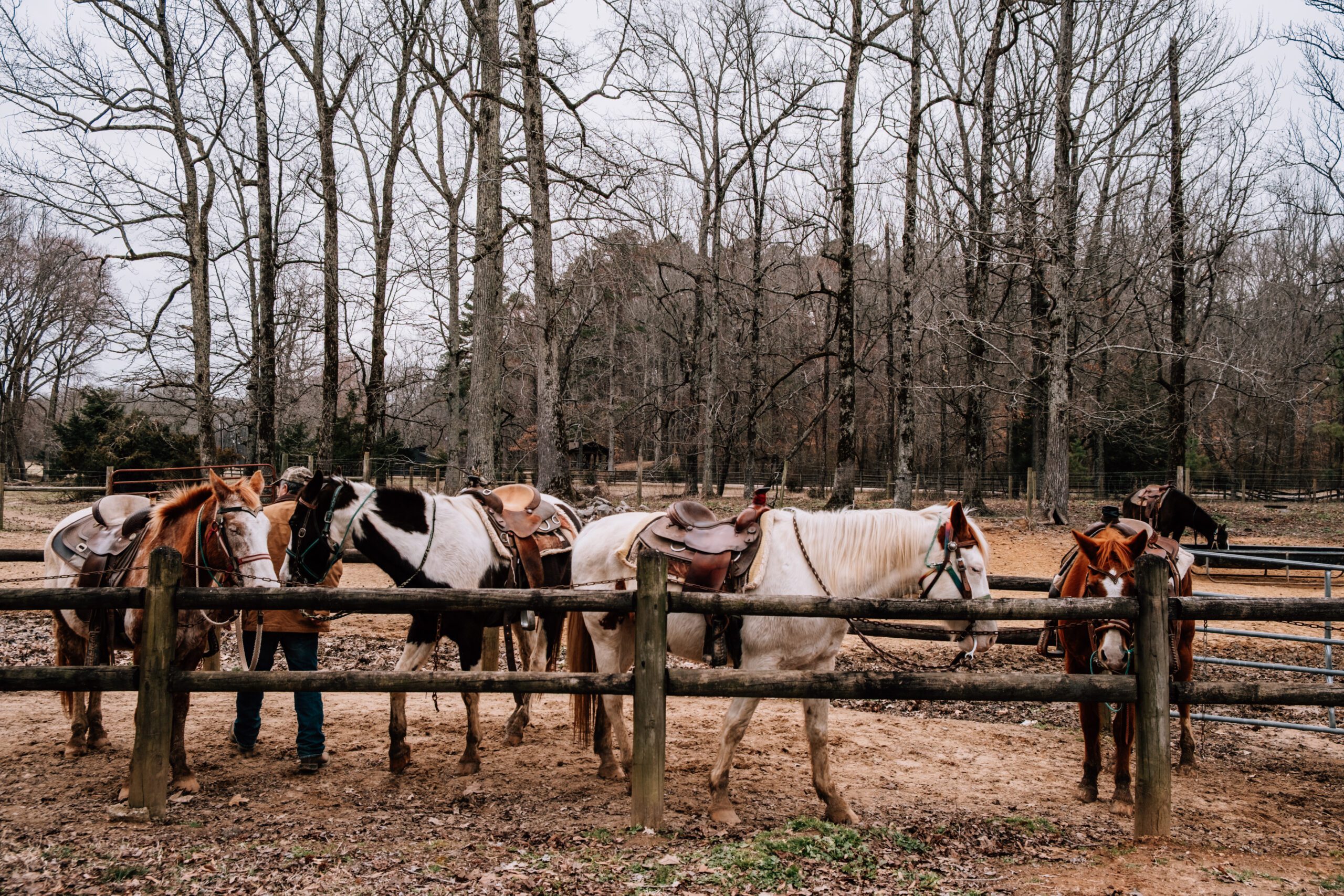
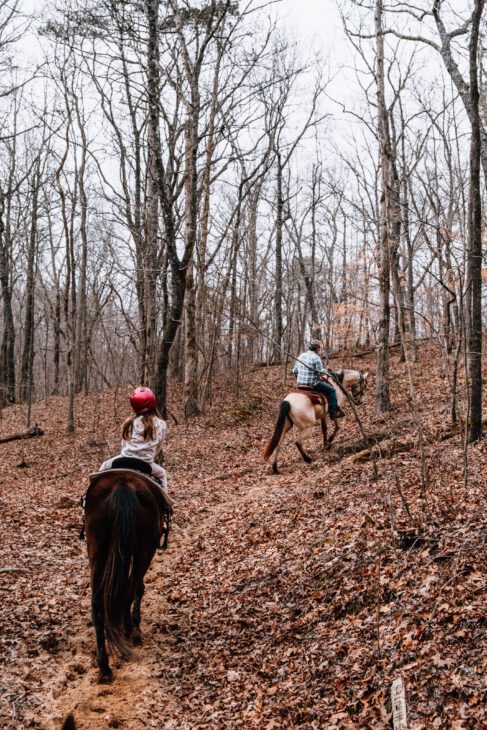
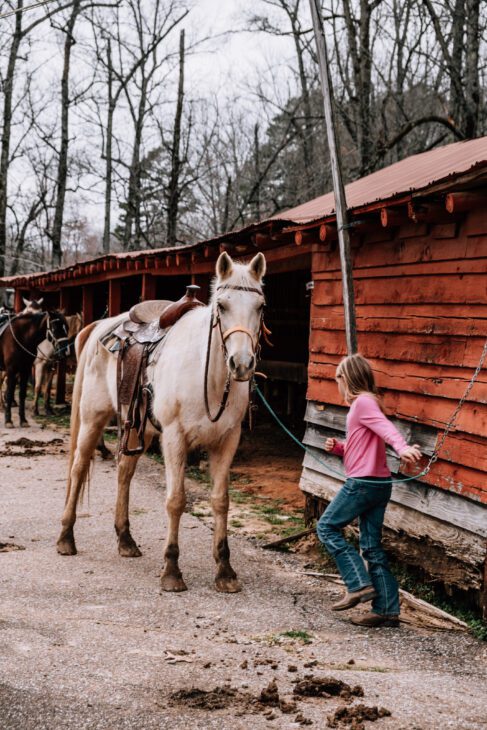
Chickasaw is the only state park in the system that offers both a wrangler campground and guided horseback rides, which means you can B.Y.O.H. (bring your own horse) and explore the hundreds of miles between the State Park and neighboring State Forest; or, you can book a ride at the Chickasaw Riding Stables, a family-operated outfitter that operates in cooperation with the state park. My 7-year-old was old enough to command her own horse; my 4-year-old rode in tandem with me on a sturdy horse named Cojack; and my husband was paired with Cash, a horse we joked was disappointed to be carrying a full-grown man instead of a much-lighter child.
After a brief tutorial, our group ventured onto a well-worn trail through the woods; these horses had clearly done this before. Our guide kept a watchful eye on my daughter who followed, instructing her to lean forward as her horse climbed hills and lean back as he descended. From my trailing viewpoint, I could see her nervous energy dissipate and the thrill of this new experience begin to sink in. Meanwhile, my 4-year-old chatterbox didn’t stop talking to our horse, narrating our journey and giving him encouraging words, the entire ride! We meandered along for nearly an hour, occasionally trudging through mud piles, bouncing up hills, or trotting along a straightaway. The second we re-approached the stables, the girls asked if we could do it all again the next day.
TRAILS, BIRDS, AND MORE
When enjoying the relaxing cabin life at Chickasaw, especially in early March before the hibernating season has ended, it’s kind of easy to forget that you’re surrounded by a vibrant natural world. But this lakefront retreat is part of a diverse set of forest and wetland ecosystems, and the trail system is the best way to explore its distinct environs.
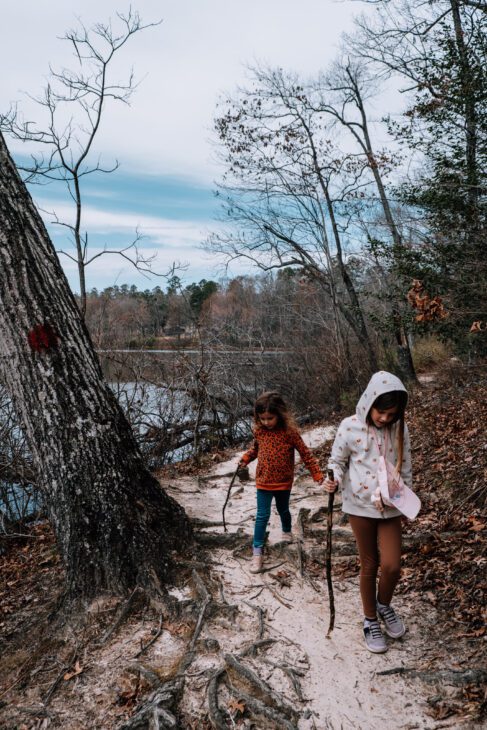
The .8-mile Owen Springs Trail and the .65-mile Fern Creek Trail traverse both wetland and hardwood areas, while the .95-mile Forked Pine Trail passes through established pine forest. At the recommendation of a ranger, we chose to hike the 1.5-mile Lake Shore Trail, which is the park’s most popular. It encircles Lake Placid with a midpoint detour that crosses the lake’s pedestrian bridge. Best of all, there are numerous spots to hop on the trail. We began just down the lawn from our cabin, following the trail in a clockwise motion. The path is mostly flat and easy for small legs. As we rounded the lake’s most northeastern edge, we entered a swampy stretch where a series of boardwalks form the path. It was great fun to dodge the mud and avoid the cracks. On the south side of the lake, the terrain gets a little more elevated, and we once again imagined that we were keeping lookout from the cliffs and spotting pirates on the lake. After clocking about 1 mile, the bridge was the perfect endpoint for us; the playground awaited on the other side.
Had we continued up the western side of the Lake, we would have passed the Wrangler Campground, picnic areas, and the historic Sagamore Lodge (a WPA-era event venue) before returning to the beach and recreation area. A quick detour onto the park road leads uphill to the aviary across from the Visitor Center where an educational Birds of Prey program gives park guests and visiting groups an up-close look at native raptors that have sustained injuries and are now cared for by the park.
STATE FOREST
Another unique feature of the park? Its location within the much-larger Chickasaw State Forest. Ranger Elder emphasized how these 14,000 acres provide the opportunity for recreational activities that are usually unavailable on state park land. Through the neighboring State Forest, visitors can explore hundreds of miles of trails, for hiking as well as horseback riding and ATV-riding. Hunting is also allowed in the State Forest as long as it follows Tennessee hunting dates and regulations. There are even a couple old cemeteries to explore!
SURROUNDING PARKS
If you’re on a Tennessee State Park quest like us, Chickasaw is a great base from which to explore two other parks in the Jackson area.
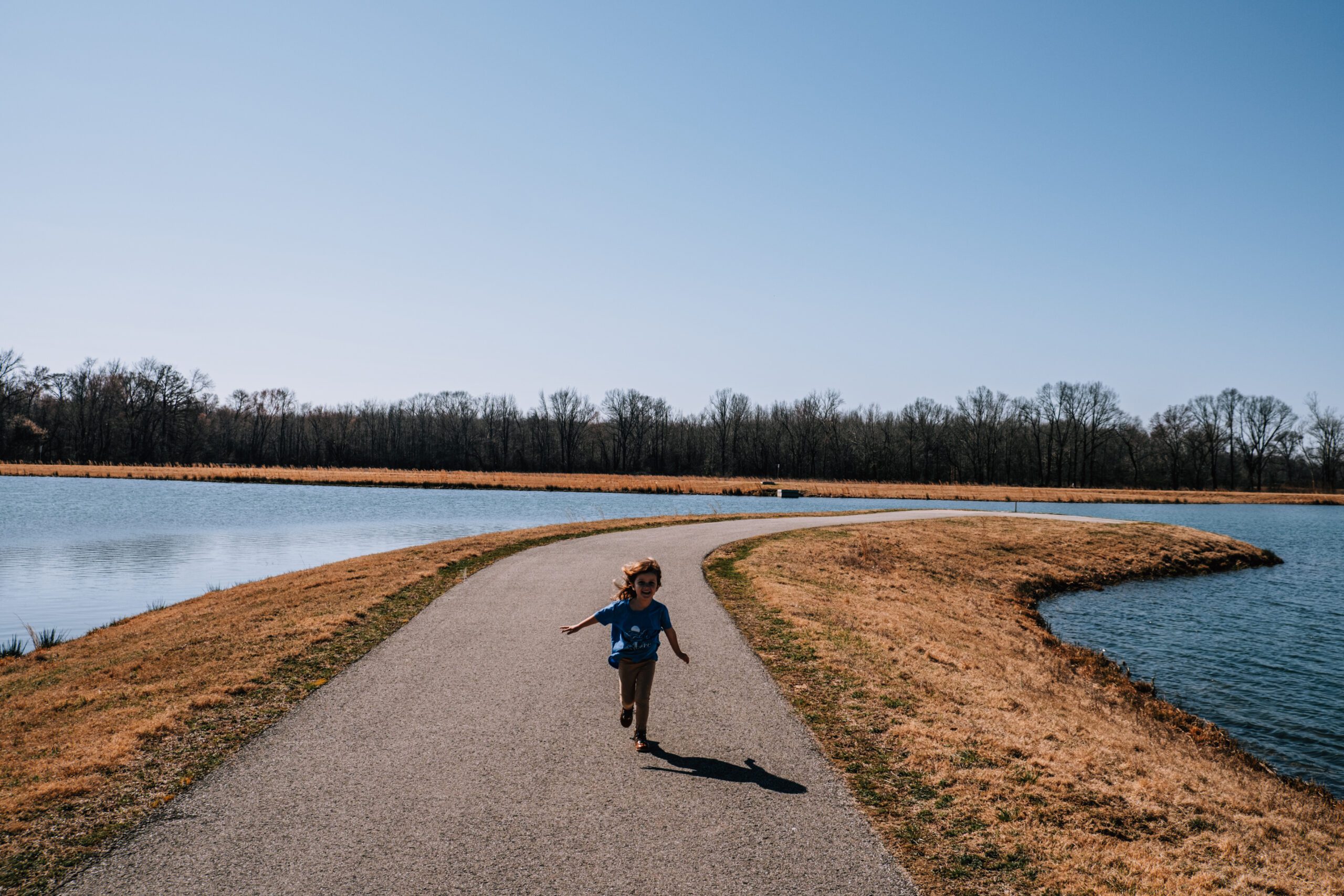
Middle Fork Bottoms State Park opened in August 2024 as the 58th park in the system. It’s a day-use park around 860 acres with a unique story: the land was designed as a flood mitigation site and has since begun restoration to natural grassland. We drove up from Chickasaw on a bright, warm morning and enjoyed a walk along its scenic, paved trails with Park Manager Michael Champagne. Dog-walkers and morning joggers were out in full-force, taking advantage of this expansive recreation area just a few miles from Jackson. The exciting thing about Middle Fork Bottoms is that its story is still being written. Currently, five lakes provide area for fishing and boat paddles; four miles of paved trails are open; and areas of grassland, hardwood, savannah, and cypress grove are developing. The construction of guest amenities, including a visitor center, gift shop, picnic shelters, restrooms, and kayak launch, is on the horizon. It’s an incredible, peaceful space to get outdoors and an exciting one to follow as it continues to evolve.
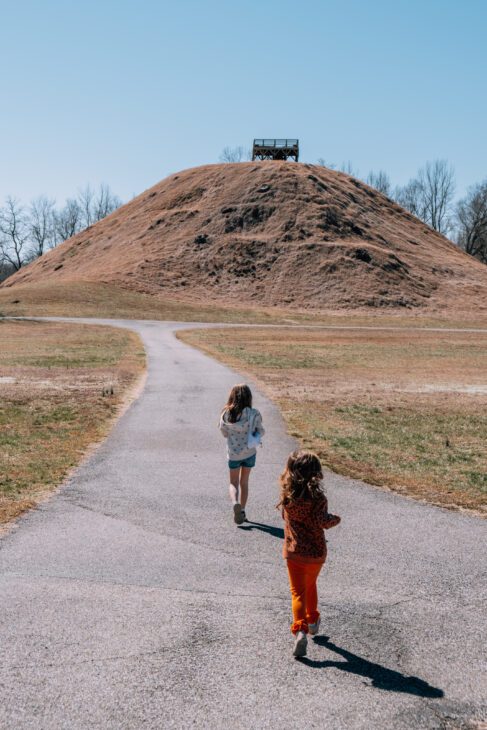
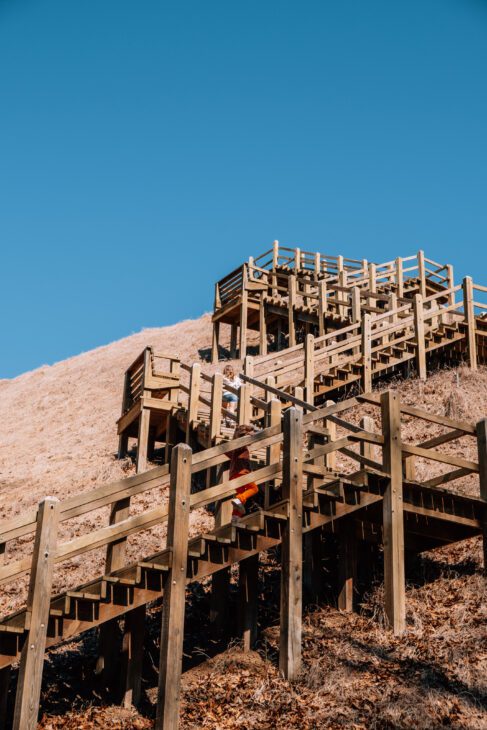
Less than 20 minutes northeast of Chickasaw is Pinson Mounds State Archaeological Park. This is one of the state’s two archaeological parks and features 17 Native American mounds from the Middle Woodland period – over 2,000 years ago! Pinson was the final park on our area tour, as we made a mid-morning visit after checking out of our cabin at Chickasaw. We began our visit in the Interpretive Center and Museum, a necessary starting point to understand the context and incredible history this area holds. The mounds were a sacred pilgrimage site, not a residential one. Deposits of shell, obsidian, and copper indicate that early visitors trekked to the area from as far away as Colorado and the Gulf Coast. The arrangement of the mounds, themselves, are significant; they were designed to mark the points of sunrise at the solar equinox and solstice – an ancient astronomical record. Saul’s Mound is the 72-foot-high hub of the park; on a beautiful, clear day, we made the climb to the observation deck for an all-encompassing view of the area.
The visit to Pinson Mounds was a wonderful way to close out our Spring Break stay; we spent the morning exploring a fascinating piece of Tennessee history and enjoyed a picnic lunch and playground session before hopping in the car and heading home, holding on to the bliss of a disconnected vacation for as long as we could.
CHECKLIST:
Date: March 2025
Count: 34 of 60
Region: West
Must-See: Take in a sunrise view of the lake-spanning pedestrian bridge.