
I really struggle with how to acknowledge and address my convictions regarding politics and social issues in the online forum. When it comes to social media, everyone has a voice, but what exactly is its purpose? To share for posterity’s sake? To reach an audience? To inform? To entertain? To effect change? To simply create a record of one’s presence by speaking into the void? Naturally, I think that purpose is different from person to person, and I personally don’t use social media to share anything and everything. When it comes to issues of heft and importance, I don’t want to feel like I’m speaking out simply to meet some modern-day social criteria of passively voicing support or agreement.
But remaining silent when I have strong convictions feels negligent as well. No matter how small, social media is part of my presence in the world. And if I’m not using that part of my voice to speak up about what matters to me, I feel that my silence is mispresenting my feelings, inaccurately indicating that things of importance don’t have a place in my rose-colored existence.
The part of me that aims to write with purpose questions why even share meaningless thoughts from an ill-equipped author; but I also believe strongly in the simple power of personal stories and experiences, especially ones without (necessarily) an outline or agenda. They help us relate to one another through similar experiences; they help us see truths about ourselves when we connect our common understandings.
I am a person of incredible privilege – I come from the legacy of a solidly middle-class family; my K-12 education was from high-performing public schools; my family’s finances allowed me the opportunity to attend an expensive private university in NYC; I’ve never struggled to find employment; I’ve always had a safety net on which to fall back if, necessary; connections have opened up many opportunities in my life. A lot of this comes from a place of financial privilege, but all of it is rooted in my white skin.
My grade school experience couldn’t be considered rich in diversity, but it wasn’t homogenous, either. I saw representation of other races and cultures every day. I was raised with gratitude, never with negativities; there was never an “anti” or “them” perspective. At the time, I considered my community “diverse,” but my personal bubble was devoid of a real understanding of outside experiences. We never discussed anything of social importance, never acknowledged the real struggles of people different than me. I lived in my privilege, and as a result I grew up unaware of the harsher realities of the world, especially those suffered by people less privileged than me.
The recent deaths of George Floyd, Ahmaud Arbery, and Breonna Taylor are new incidents adding to a cup of tears that has long been spilling over. I cry, rage, fear, and grieve like many humans do, though I recognize I do not, cannot, understand the depths of the struggles of America’s Black community. But I revere its strength; yearn to hear and know its experience; and vow to live as an ally.
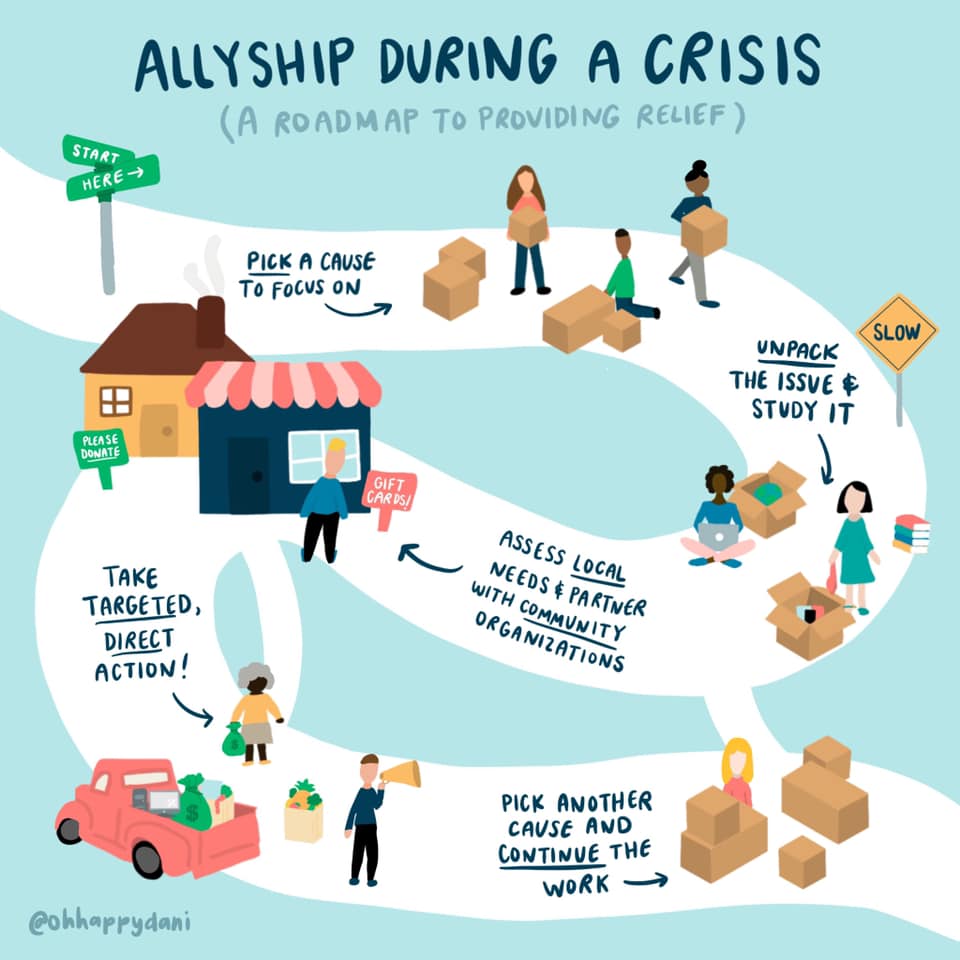
I just read Michelle Obama’s book, Becoming, and what I found incredible was how she (and Barack) have this ability recognize the little details—the action steps—it will take to effect real change to the big picture. It was fantastically motivating, yet she made it sound so easy. I struggle with the action piece of this constantly. When I consider my background, how am I equipped to identify the real needs of a community to which I do not relate—and how am I supposed to know what action steps will realistically contribute to its future success?
I work every day in a middle school with a 93% Black population, and I question all the time if I am the right leader for my students. We come from vastly different backgrounds, and it would be easy to say there is nothing about me that can relate to them. But though I can never fully understand their struggles, I need to do the work to make their world better. Despite our differences, what can I do to be the most informed, the most compassionate, the best resource, and the biggest cheerleader for them and their needs?
And, on a higher level, what can I do beyond the present to contribute to a better future?
When I got pregnant in early 2017, the politics of this country shocked, saddened, and infuriated me to the point that I struggled with the very notion of bringing a child into this society that was proving to me to be so difficult and divisive. And five months from now, I’ll be mother to two children who I hope to mold into aware, empowered, empathetic humans that will be better and bring a better future. I have spent 30+ years developing an awareness of the world outside my bubble and the lives of the people who live in it. Imagine what can be done by these little humans if they grow up with the awareness I have spent so long discovering on my own.
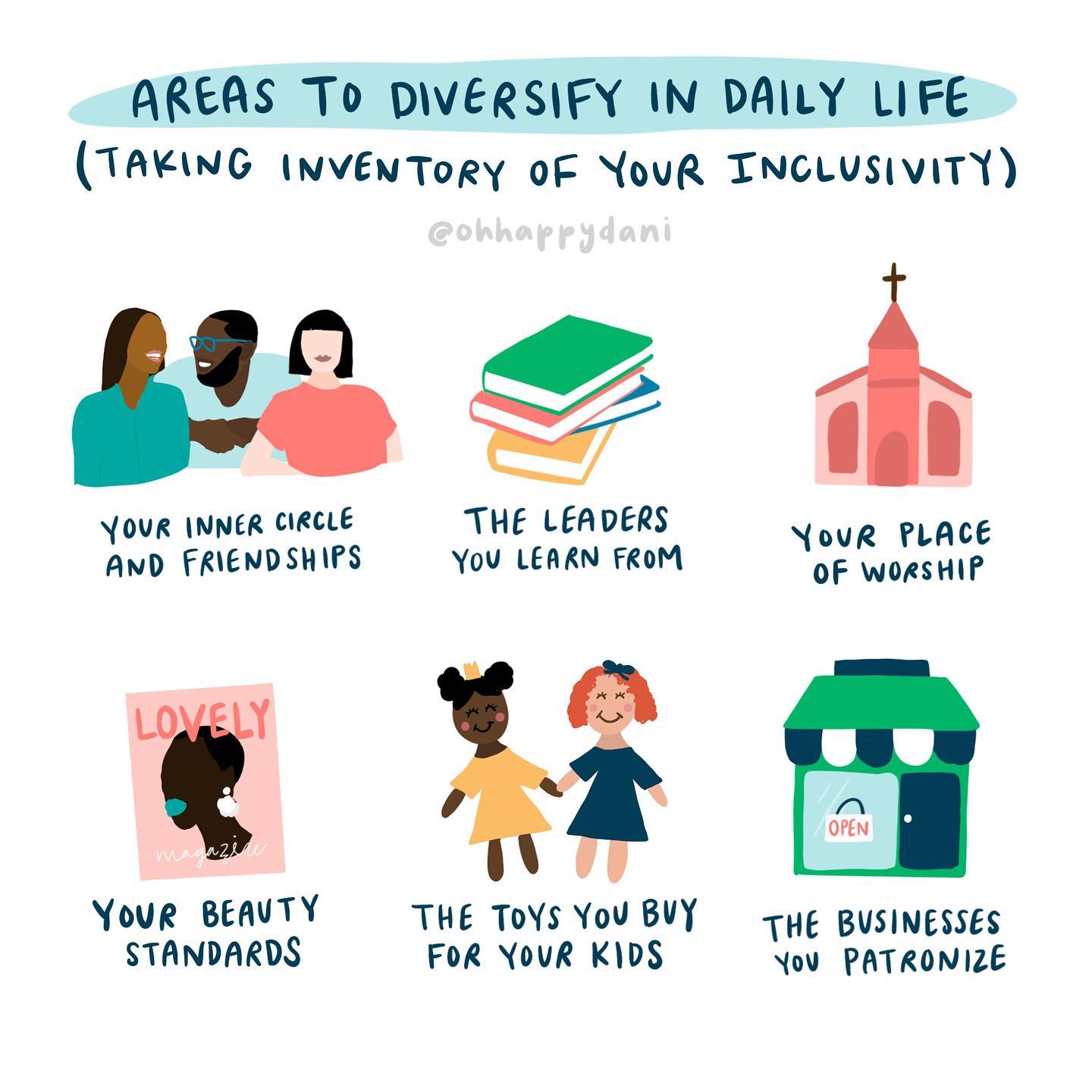
I cannot preach from a place of expertise, nor guide with the credence of experience. What I can do right now is identify and share my own tenants for contributing a better future and pledging to live them genuinely and fervently.
- Acknowledge your own position—the privileges and/or struggles that have inherently come your way based on your race, class, gender, etc., through no fault or effort of your own.
- Educate yourself on experiences or perspectives different than your own. Read, watch, listen, learn.
- Seek out situations that take you outside your bubble or comfort zone.
- Look for the humanity in people instead of judging their entire character based on prevailing or divisive criteria.
- Parent with purpose. Teach your children the not-so-pretty realities; have the tough conversations; acknowledge the inequalities and inequities; address the world’s faults (even if they don’t affect you personally); find opportunities to demonstrate or illustrate diversity.
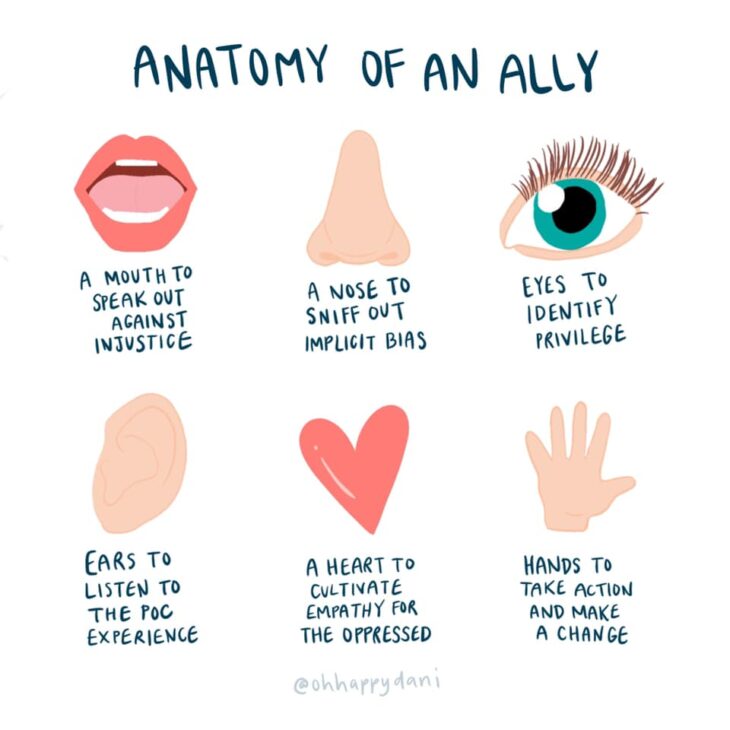
- Prove your beliefs by taking action. Read/watch/listen to diverse points of view; buy diverse toys and books; call out derogatory comments and confront injustice you see; march in a protest; contact your local representatives; research your candidates (yes, even those 3 random names you’ve never heard of, running for “District 20” when you don’t even know where District 20 is) and VOTE.
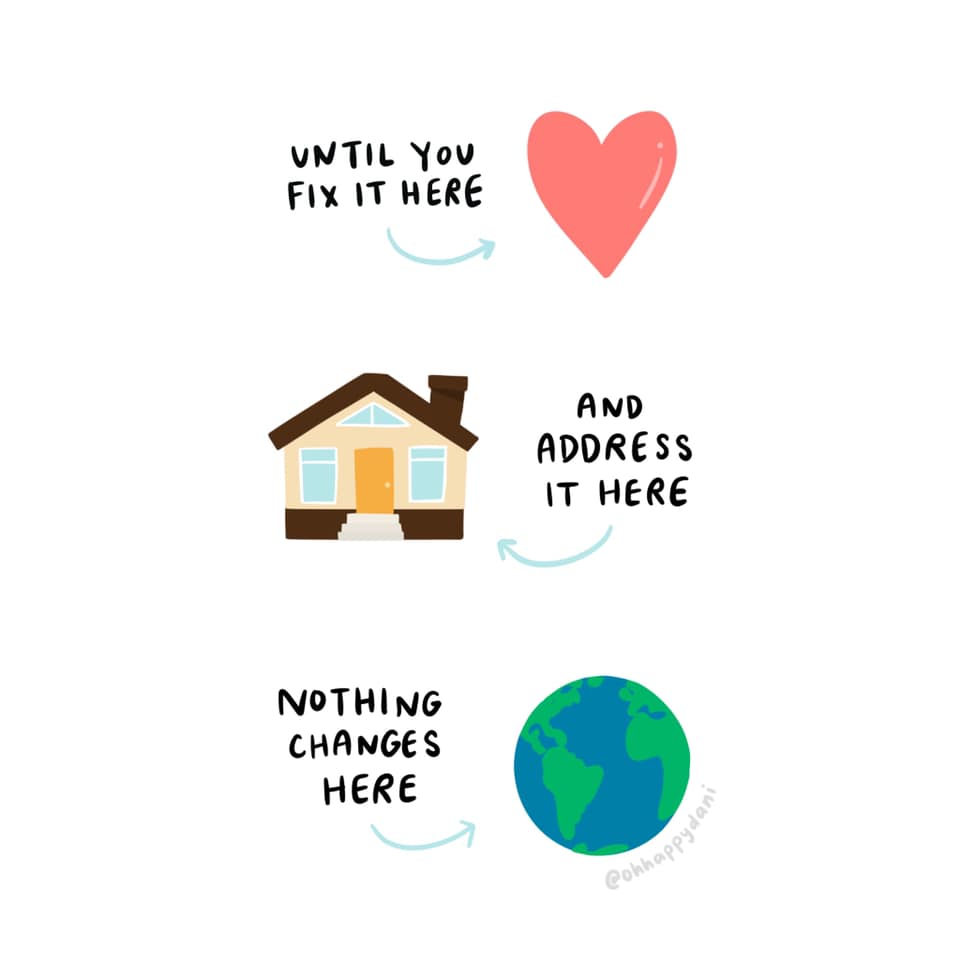
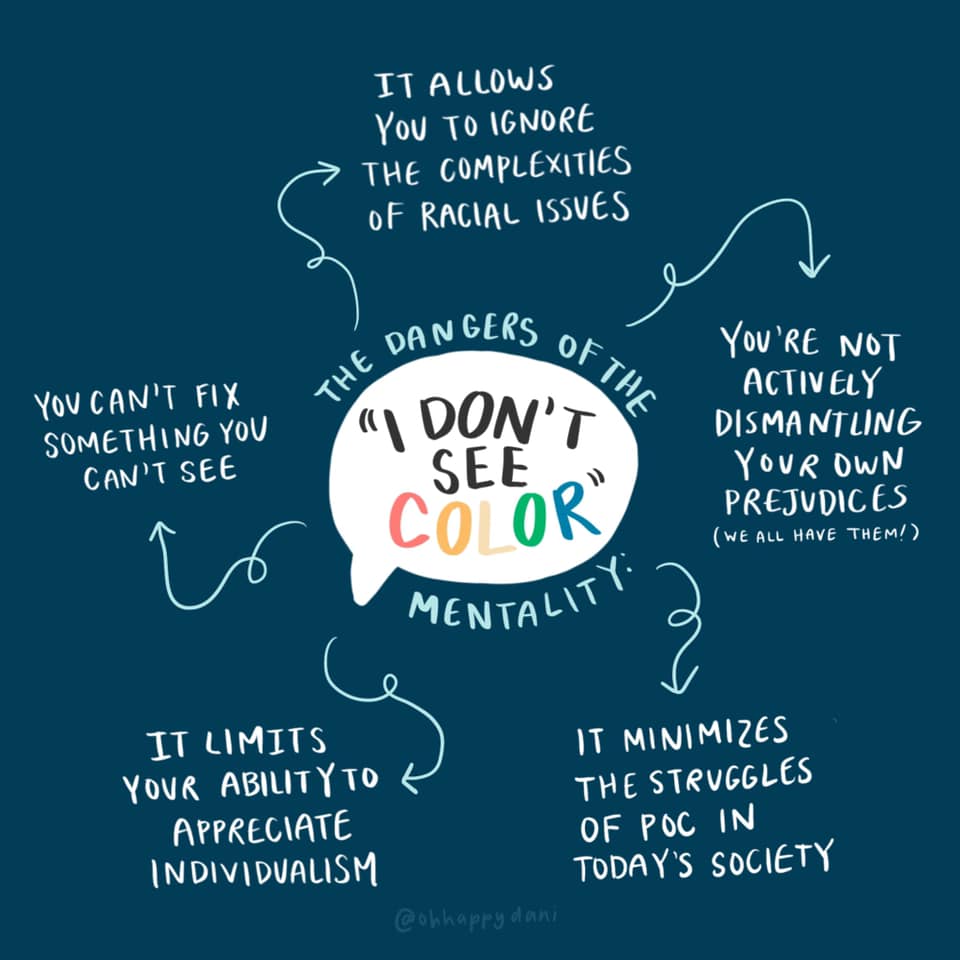
**All artwork property of @ohhappydani, who has beautifully and succinctly created a helpful guide to action and understanding.